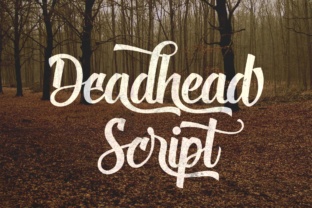
Deadhead Script: A Brush Lettering Typeface with Real-World Grit
You know the feeling when you spot a logo, a poster, or a social media graphic and something about it just feels alive? More often than not, that energy comes from the typography. Not the generic, system-default kind, but a typeface with personality—something that looks like a human actually made it, with all the beautiful imperfections that entails. That’s the space where Deadhead Script lives. It’s not just another script font; it’s a direct descendant of brush lettering, built with a level of detail that gives your work an instant dose of authenticity and flair.
More Than Just Swashes: The Anatomy of a Playful Script
Let's be clear: not all script fonts are created equal. Some feel stiff, others look generic, and many fall apart when used at larger sizes. Deadhead Script avoids these pitfalls by embracing its roots. The "playful and exceptional" part of its description isn't just marketing copy—it's evident in the fluid connections between letters, the varied baseline that mimics natural handwriting, and the subtle texture that suggests a real brush tip. This isn't a font that's trying to look handwritten; it is a font that was meticulously crafted to be the digital extension of brush lettering.
This attention to detail is what separates a premium font from a free download. You'll notice it in the alternates and ligatures—those special character combinations that prevent awkward collisions (like a loop from a 'g' crashing into a 'y'). For a designer, this is gold. It means you can set a word like "love" or "beautiful" and have it flow with a natural, unforced rhythm, which is crucial for logo design and brand identity work where every detail is scrutinized.
Where Does a Font Like This Actually Shine?
Theory is nice, but application is everything. Deadhead Script isn't a font for body text in a legal document. It’s a display font, built for impact. Here’s where it becomes a secret weapon for your projects:
- Branding & Logos: For a boutique, a coffee shop, a craft brewery, or a personal brand, a script font injects warmth and approachability. Deadhead Script, with its balanced weight and clear legibility, works beautifully as a primary logotype or a secondary tagline. It says, "We care about craft."
- Packaging & Merchandise: Think about the last product you picked up off a shelf. The typography told you a story before you read a single word. Use this typeface on labels for artisan goods, on tote bags, or on merchandise where you want that handmade, premium feel.
- Social Media & Digital Content: In a sea of sans-serif quotes and minimalist graphics, a bold, textured script stops the scroll. It’s perfect for Instagram quotes, YouTube thumbnails, podcast covers, or any social media graphic that needs to convey energy and personality.
- Print & Event Collateral: Wedding invitations, event posters, festival banners, and thank-you cards all benefit from a touch of elegance and excitement. The font's character shines in high-resolution print.
- Web Design & Blogs: Use it sparingly for impactful headers, pull quotes, or a hero section on a website. Paired with a clean sans serif font for body text, it creates a dynamic visual hierarchy that guides the reader's eye.
Practical Tips for Taming a Script Typeface
Using a font like Deadhead Script effectively is a skill. Here’s how to avoid common mistakes and get the most out of it:
- Respect Its Role: This is your headline font, your accent font. Never use it for paragraphs. Its strength is in short, impactful bursts of text.
- Pairing is Everything: The magic formula is contrast. Pair Deadhead Script with a sturdy, neutral serif font for a classic, editorial look (think magazine layouts). For a more modern, clean feel, match it with a geometric sans serif font. The contrast lets the script's personality pop without overwhelming the design.
- Test at Scale: Always preview your text at the actual size it will be used. A font that looks great in a 24pt preview might lose detail or become illegible at 12pt on a mobile screen. Conversely, check it at large poster sizes to see how the textures and curves hold up.
- Explore the Extras: Don't just type and go. Check the font's character map or OpenType features. You might find stylistic alternates that change the look of key letters, or swashes that add a flourish to a beginning 'S' or ending 't'. This is how you move from using a font to truly customizing it.
- Licensing Matters: If you're using it for a client project, a product you sell, or a commercial website, ensure you have the correct commercial font license. Reputable foundries make this clear. It's a professional obligation and protects both you and your client.
Building a Cohesive Visual Language
Ultimately, a typeface like Deadhead Script is a tool for communication. It helps solve a specific problem: how to make a design feel human, energetic, and memorable. When you integrate it thoughtfully into a brand identity system, it contributes to visual consistency. That same playful script on your Instagram story, your website header, and your business card creates a recognizable thread that builds brand recognition.
It also directly impacts audience engagement. A well-chosen, expressive font can evoke emotion—joy, excitement, nostalgia—far more effectively than a neutral one. It makes your content more professional in its presentation, not because it's stiff, but because it shows deliberate, skilled curation. For a small business owner or a content creator, that's a powerful way to stand out.
So, if your project calls for a voice that’s less corporate and more crafted, less generic and more genuine, a brush-inspired script font is worth serious consideration. Deadhead Script offers that specific blend of artistic flair and functional design. It’s a creative asset that, when used with intention, can elevate your work from simply seen to truly felt. The best typography doesn't just display words; it gives them a soul.